
Last updated date: January 8, 2026 | 9:52 pm
Table of Contents
Running a small business in 2026, including SMEs and fast-growing startups, means dealing
with an ever-changing economic landscape and customer demands. To stay ahead, business
owners and founders need clear, easy-to-follow financial strategies backed by real numbers.
Many businesses struggle not because they lack ambition, but because managing cash flow,
budgeting, KPIs, and tax compliance becomes overwhelming without clear financial visibility.
These challenges often make it difficult to plan ahead and make confident decisions.
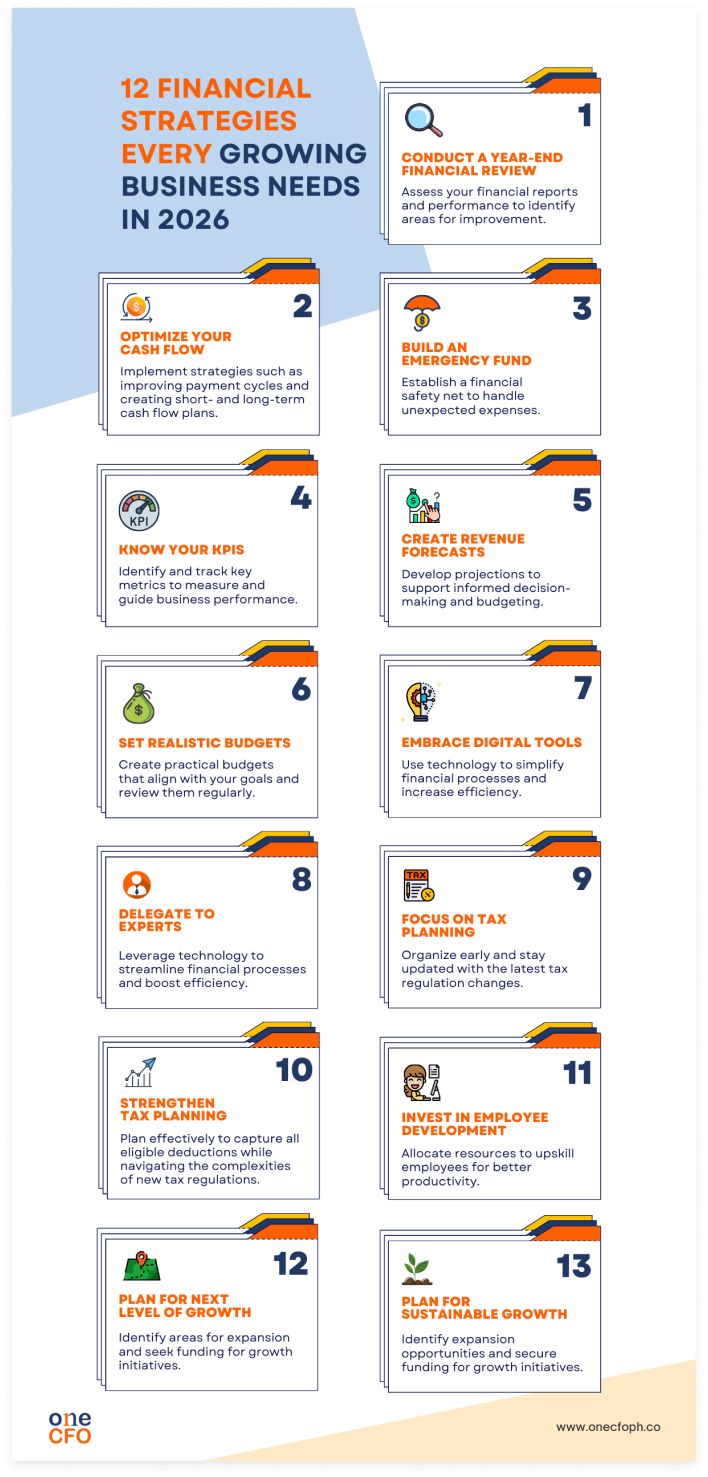
This article breaks down 12 practical financial strategies that small businesses, can use to
build a stronger financial foundation in 2026. These strategies are designed to help you
manage your finances more effectively, minimize risks, and gain clarity as you grow.
What are the top financial strategies small businesses should focus on in 2026?
Small businesses face new financial challenges each year. In 2026, practical financial strategies, modern tools, and actionable guidance help SMEs and startups make smarter decisions and position themselves for sustainable growth.
1. Conduct a financial review to drive small business growth
It is crucial to review your past financial performance to gain a clear understanding of
your current financial situation. Evaluating where your business has been provides valuable
insights to help create a more effective plan for growing in 2026.
Assess your past income statements, balance sheets,
and cash flow statements to pinpoint
your wins and areas for improvement in the new year.
If you’ve fallen behind or lack the time to prepare these reports, consider outsourcing to
financial experts who can help you catch up on accounting tasks and financial statements
preparation.
In addition to financial reports, review the previous year’s expenses and how the company
performed against the initial budget.
Analyzing your financial performance will help you develop actionable plans and determine
which strategies work.
2. Optimize cash flow to drive growth in 2026
Cash flow issues are among the most common reasons small businesses fail. Proper cash flow management ensures you can sustain your daily operations, fund your growth, and thrive in 2026.
Tip 1: Manage Payment Cycles
Businesses can improve cash flow by collecting payments faster and extending supplier payment terms, keeping more cash available for daily operations. This can be done by invoicing promptly, following up on receivables, and negotiating longer payment terms with suppliers.
Tip 2: Use a 13-Week Cash Flow Forecast
A 13-week cash flow forecast helps
businesses track income and expenses weekly, identify
cash gaps early, and adjust spending before shortages occur.
For example, a manufacturing business can use this forecast to anticipate costs like raw
materials, payroll, and utilities. Preparing for these expenses in advance allows for better
payment timing and more proactive cash management.
Tip 3: Combine Short- and Long-Term Forecasting
Pair your 13-week forecast with a longer-term plan, such as a 12-month rolling budget. This
approach prepares your business for different scenarios, improves decision-making, and helps
you navigate uncertain economic conditions.
Discover valuable strategies for effective cash flow management by watching this engaging
video!
3. Build an emergency fund to protect your business
Having an emergency fund is a crucial strategy for growing businesses, SMEs, and startups.
The benefits of building an emergency fund include safeguarding cash flow, reducing
financial risk, and ensuring your company can respond to unexpected challenges while
pursuing growth opportunities.
If you haven’t yet, make it a goal to build an emergency or contingency fund, typically
three to six months’ worth of operating expenses.
Emergency funds serve as your
business’s safety net, so you won’t have to make big cuts or
incur debt when unexpected costs arise.
When saving up for an emergency, keeping it in a high-yield savings account is best to earn
interest while keeping it accessible. Also, make sure to replenish it after you’ve made any
withdrawals.
4. Track KPIs to make smarter financial decisions
Another financial strategy for success in 2026 is tracking your key performance indicators
(KPIs).
There are many KPIs for sales, marketing, and finance, but you don’t have to track them all
at once; you can choose only those that align with your business goals.
For example, you can track gross margins to determine your
profitability. You can also
monitor metrics such as the cash conversion cycle and operating cash flow to improve cash
flow.
Regular financial reviews and KPI tracking help founders and management teams spot trends,
manage risks, and make informed decisions that drive growth.
5. Forecast revenue to optimize cash flow
Creating revenue forecasts is a crucial financial strategy for
growing businesses, SMEs, and
startups. Accurate forecasts help decision-makers plan budgets, manage cash flow
effectively, and make informed decisions to drive sustainable growth in 2026.
To turn these forecasts into actionable insights, start by analyzing historical sales data,
market trends, and economic conditions to build revenue projections.
Since building projections requires technical and financial expertise, consider outsourcing
to fractional CFOs who can provide precise revenue forecasts to support informed
decision-making.
You may also request your projections to be broken down by product lines, services, or
customer segments for a more detailed forecast.
Furthermore, regularly update your forecasts with the most accurate data to reflect actual
market or operational conditions.
6. Set realistic budgets for SMEs and startups
Setting realistic budgets is essential for SMEs and startups to maintain financial control
and achieve growth targets. Thoughtful budgeting helps business owners and
founders allocate
resources efficiently, manage cash flow, and make informed decisions for 2026.
When setting a budget, incorporate your insights and
findings from financial reviews and
forecasts.
Another tip in organizing a budget is to categorize expenses into operational costs, growth
initiatives, and contingencies to ensure you have everything covered.
You can also group expenses into essentials and discretionary costs to quickly know which to
postpone or adjust during a cash crunch.
Lastly, regularly monitor your budget and identify any deviations between actual income and
spending and budgeted figures. Knowing these deviations and adjusting accordingly will
ensure your budget remains a valuable decision-making tool.
7. Use digital tools to streamline finance operations
In today’s digital age, technology is transforming how businesses manage their financial
operations. If you’re not yet using digital tools and systems, 2026 is the year to start.
Accounting software like Xero helps businesses automate invoicing, expense
tracking, and
financial reporting.
However, if you need something more comprehensive that covers every business area, you can
use enterprise resource planning (ERP) software as an all-in-one solution. ERPs like Britana
not only cover accounting functions but also areas like inventory and sales order
management.
With digital tools, SMEs can save time, minimize errors, and access real-time analytics for
their decision-making.
8. Delegate financial tasks to focus on growth
Small business owners often wear many hats, managing sales, marketing, customer service, and
operations simultaneously. While it may be tempting to handle finances in-house, effective
financial management requires specialized expertise.
To stay focused on growth, consider outsourcing accounting and CFO services for tasks such
as bookkeeping, tax preparation, financial reporting, and strategic planning.
Doing so helps you save time, ensure compliance, and focus on what you do best for your
small business. Outsourcing to experts also gives business owners peace of mind, knowing
their finances are handled well.
9. Strengthen tax planning and compliance
As SMEs prepare for the 2026 tax year, tax planning and compliance should be top priorities.
Thinking ahead allows businesses to understand new tax regulations, identify opportunities
to reduce tax liabilities, and reinvest savings into growth initiatives.
One of the most immediate benefits of proactive tax planning is the ability to identify and
maximize allowable tax deductions.
Many tax deductions arise from everyday
business activities, such as operational costs,
employee wages, and investments in equipment or technology. Carefully tracking and
documenting these expenses helps businesses maximize deductions and support long-term
financial health.
Watch this video to discover legal ways to minimize your tax liabilities:
Proper tax planning also ensures compliance with evolving regulations, including
requirements such as the use of invoices instead of official
receipts and the imposition of withholding tax on
online sellers. Staying compliant helps
avoid penalties and unexpected cash flow disruptions.
To make tax planning easier, SMEs and startups in the Philippines can use digital tools like
Doctax.ph to ask tax-related questions and be matched
with tax experts who can provide
guidance tailored to current regulations.

10. Monitor trends to drive financial growth
If you’re wondering how SMEs can better navigate change, the quick answer is monitoring
industry trends.
Monitoring industry trends helps SMEs, startups, and growing businesses stay ahead of market
shifts, identify new opportunities, and anticipate risks that could impact financial
performance.
By keeping a close eye on consumer behavior, competitor moves, pricing shifts, and
regulatory changes, business owners and founders can make timely adjustments to budgets,
forecasts, and growth plans to remain resilient in 2026.
Some reliable sources you can consult include industry reports, government publications, and
trade associations. You can also attend conferences to stay up to date on the latest trends
in your industry or network with other business owners.
However, the work doesn’t stop at monitoring. Once you identify these market shifts, you
must take action and adapt your business model. An example is investing in digital systems
once you notice a digitalization trend among your competitors.
11. Invest in employee development to boost performance
Being financially successful in a business doesn’t only stem from excellent sales or
efficient operations - a skilled and motivated workforce also plays a significant role.
Allocate a specific budget for training programs, workshops, and certifications to encourage
your employees to upskill. Keep open communication within the company to understand what
your employees need to grow professionally.
As a business owner, you should also review whether your staff's current skills align with
the company's strategic goals. This way, you can tailor training programs or hiring
strategies to address the skill gap.
Knowing how to address employee needs boosts productivity, reduces turnover, and helps
employees grow their skills and confidence.
12. Plan for sustainable growth in your SME or startup
If your business feels stagnant, it may be because you haven’t mapped out the next stage of
growth. Strategic planning is essential for SMEs, startups, and growing businesses as it
helps set clear goals, prioritize actions, and take deliberate steps to move your business
forward.
Growth doesn’t happen by chance—it happens when you plan for it.
Start by reviewing your financial performance and identifying expansion opportunities, such
as entering new markets, launching new products or services, or upgrading your
infrastructure.
However, not all small businesses can fund expansion independently. In these cases,
financing options such as bank loans, grants, or venture capital can provide the
resources
needed to support growth initiatives and take the business to the next level.
Watch this episode of OneCFO’s KwentuOne Podcast to learn why many
Philippine startups fail
— even with funding, talent, and passion — and get practical tips on avoiding common
pitfalls while building a sustainable business.
How can SMEs and startups thrive in 2026?
The key to not only surviving but also thriving in 2026 is to prepare and strategize early.
By establishing a strong financial foundation using the 12 strategies outlined in this
article—covering cash flow, budgeting, KPIs, digital tools, tax planning, and more—SMEs and
startups can make smarter financial decisions, minimize risks, and drive growth.
Additionally, working with financial experts like OneCFO, the preferred fractional CFO for
SMEs and startups in the Philippines, can further strengthen your financial management.
From bookkeeping, tax planning, and financial reporting to financial projections, OneCFO
provides the guidance and support your business needs to thrive in 2026 and beyond.
Visit us at onecfoph.co or email us at [email protected] to
discover how our fractional CFO
expertise can help small businesses grow.
Read our disclaimer here.
About OneCFO
Based in the Philippines, OneCFO provides tech-enabled fractional CFO, bookkeeping, tax management, and payroll
support to startups, scaleups, and small- to mid-sized businesses across Southeast Asia.
We help companies manage cash flow, fundraising, and financial strategy. With our fractional CFO expertise,
business owners and finance teams gain clarity in finance and the confidence to grow.