

Last updated date: January 27, 2026 | 11:30 pm
Table of Contents
Running a small business or startup requires clear financial direction—understanding what’s
working, what’s draining resources, and how each decision impacts overall financial health.
A fractional CFO provides the strategic oversight needed to bring that clarity, without the
cost of a full-time hire.
As companies scale, basic accounting and spreadsheets are no longer enough to provide the
insights needed to bring the business to the next level. Business owners need a better
understanding of cash flow, profitability, and financial priorities to support smarter
decision-making.
This is where fractional CFO support becomes invaluable, offering senior-level financial
guidance that adapts to a company’s stage, whether navigating expansion, operational
changes, or periods of uncertainty.
Curious to know what a fractional CFO actually does? Read on to understand their role and
the key benefits their expertise delivers.
Key Takeaways
Why hiring a fractional CFO is your best growth move
What is a fractional CFO?
A Fractional CFO provides the same high-level leadership as a traditional CFO executive, but
without the full-time commitment. Instead of a permanent hire, businesses can bring in
experienced financial guidance on a part-time, outsourced, or project basis.
For many SMEs and startups, this approach fills a critical gap. Basic bookkeeping and
spreadsheets show what happened in the past, but they do not provide the insight needed to
plan ahead or make confident decisions. At the same time, hiring a full-time CFO is often
too costly at this stage.
A fractional CFO bridges that gap by bringing CFO-level insight and strategic
thinking—without the cost of a permanent position. The focus is on financial clarity,
planning, and decision support, so even in a flexible setup, the value is real.
Rather than acting as “extra help,” a fractional CFO works as a key advisor, offering the
perspective and experience typically found in the leadership teams of larger organizations.
Watch: A fractional CFO’s perspective on business survival and revenue growth
Fractional CFO vs. Full-Time CFO: Key Differences
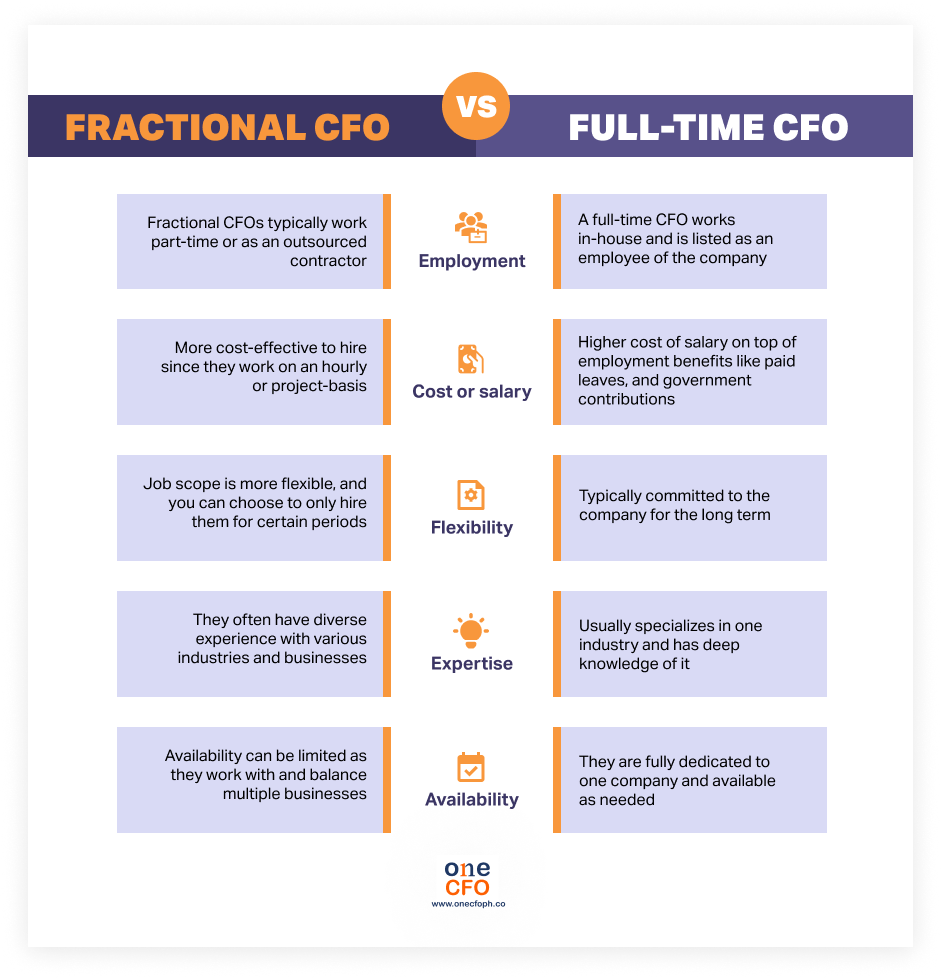
Fractional and full-time CFOs offer similar expertise, but they differ in cost, flexibility,
and availability.
Here’s a quick guide on how they compare:
Why should SMEs and startups hire a fractional CFO?
Hiring a fractional CFO now means you don’t have to wait until you’re a giant company to
have expert financial leadership. It’s about getting a clear view of your financial health
and a strategic guide during your most critical growth phases, all through an affordable
partnership that grows as you do.
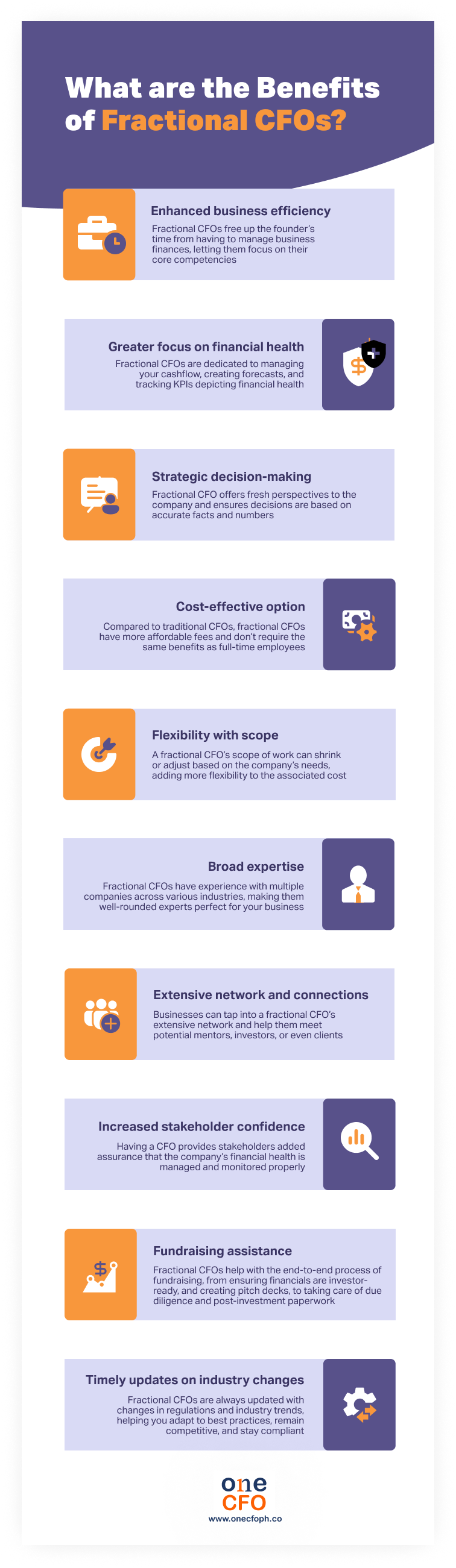
Here are the key ways fractional CFOs add value to SMEs and startups:
#1 Enhanced business efficiency
A fractional CFO improves business efficiency by implementing the right financial systems
and processes. They free up founders and business owners to focus on what they do best while
ensuring that operations like bookkeeping, reporting, and cash flow management run smoothly.
By automating workflows and introducing the right tools, fractional CFOs help startups and
SMEs save time, reduce errors, and make smarter, faster business decisions.
These seasoned financial experts can seamlessly integrate themselves into your existing
systems, providing the expertise and bandwidth you need to navigate the complexities with
confidence.
#2 Why does a fractional CFO improve financial health?
To build a successful business, you need to understand your numbers and manage your finances
effectively. Having a dedicated CFO, even a fractional one, ensures there’s an expert
tracking and improving your business’s financial health.
Fractional CFOs build financial projections to
anticipate potential risks and devise action
plans to mitigate them.
Furthermore, fractional CFOs are adept at managing cash flow, ensuring the business
consistently has enough to cover its dues and survive any cash crunch.
Learn what fractional CFO experts have to say about how to
effectively manage your cash
flow:
#3 Strategic decision-making
Bringing a fractional CFO into your business makes decision-making more strategic, as you
can base your choices on accurate financial information. Key decisions, like the right time
to scale, introduce a new product, or make investments, are all better informed with a CFO's
insights.
Using numbers and facts, fractional CFOs keep businesses on track to achieve their
short-term and long-term goals. They contribute to this by tracking KPIs and advising on how
to reach target values.
An example of an essential KPI that fractional CFOs
track is monthly recurring revenue
(MRR), which helps businesses understand their predictable revenue. Learn more about MRR
here:
Additionally, fractional CFOs offer innovative insights from their extensive experience
working with multiple companies. Their diverse backgrounds provide business owners with the
fresh perspective they need to enhance their business ideas.
A fractional CFO’s ability to use their cross-industry knowledge to adapt to new business
challenges also makes them a valuable asset. For example, they can introduce best practices
from other industries or suggest cost-saving strategies that have been successful elsewhere.
#4 How is a fractional CFO a cost-effective option?
Fractional CFOs are a cost-effective solution because they provide C-suite expertise without
the expense of a full-time hire. Businesses pay per project or on a retainer basis, making
it easier to access high-level financial guidance while keeping expenses predictable and
manageable.
Since fractional CFOs typically operate on a part-time or project basis, companies are not
obligated to provide them with the same compensation packages and full benefits as regular
employees.
Furthermore, the expense associated with recruiting and hiring fractional CFOs is notably
lower than hiring one full-time.
In a traditional hiring process for a senior role, companies incur expenses such as job
posting fees, recruitment agency charges, interview-related costs, signing bonuses, and
other administrative expenses - many of which are unnecessary when engaging fractional CFOs.
#5 Flexibility with scope
Another critical advantage of hiring a fractional CFO is the flexibility they offer. Unlike
full-time employees, founders can tailor the services they receive from fractional CFOs to
their current stage or needs.
This flexibility is particularly beneficial for companies with budget constraints, as
fractional CFO fees can be adjusted based on the scope of work. Fractional CFOs are also
ideal for businesses that require their expertise intermittently or for specific projects.
Engaging a fractional CFO is also a great way to test the waters before committing to a
full-time hire. Since they are outsourced, you have the freedom to decide whether to
re-engage them after the contract ends.
When hiring fractional CFOs, you can choose between getting them on a retainer basis or a
project basis.
Retainers enable fractional CFOs to work with your team on an ongoing or monthly basis,
covering the full scope of a CFO's responsibilities. On the other hand, project-based CFOs
focus on specific tasks as needed by the startup.
Watch the video to learn more about outsourced CFO services:
#6 Broad expertise
Fractional CFOs possess theoretical knowledge and bring years of experience working with
multiple businesses across various industries. Their diverse backgrounds enable them to
tackle challenges of varying complexity within a company.
Beyond their extensive expertise, fractional CFOs offer fresh perspectives, innovative
ideas, strategic insights, and best practices in business finance—skills honed through years
of hands-on experience.
As seasoned financial veterans, fractional CFOs require minimal training and supervision.
They can hit the ground running and start making positive changes in the business
immediately.
#7 Extensive network and connections
Because of their diverse experience, fractional CFOs have also built an extensive network,
which can be a big advantage for your business.
With a fractional CFO’s broad connections, they can help you form strategic partnerships
that will lead to various growth opportunities for the company. Some of the people your
fractional CFO can connect you to are:
Learn more about leveraging networks and strategic connections in this KwentuOne Podcast with Coach Artie Lopez:
#8 Increased stakeholder confidence
A seasoned fractional CFO can boost stakeholder confidence by ensuring SMEs and startups
finances are well-managed and transparent. Investors and partners know the business is in
capable hands, making them more likely to trust your decisions and support growth
initiatives.
They provide timely and accurate financial reporting, giving investors clear insights into
your company’s health. This transparency is especially valuable when seeking external
funding, whether through investments or loans.
Having expert financial guidance in the boardroom reassures investors as well that your
financials and models are well-prepared and clearly communicated. At the same time, founders
and business owners receive support to fully understand the company’s current standing and
develop strategies aligned with stakeholder expectations.
#9 Fundraising assistance
Most businesses require external funding to expand or scale, but the fundraising process can be tedious for founders.
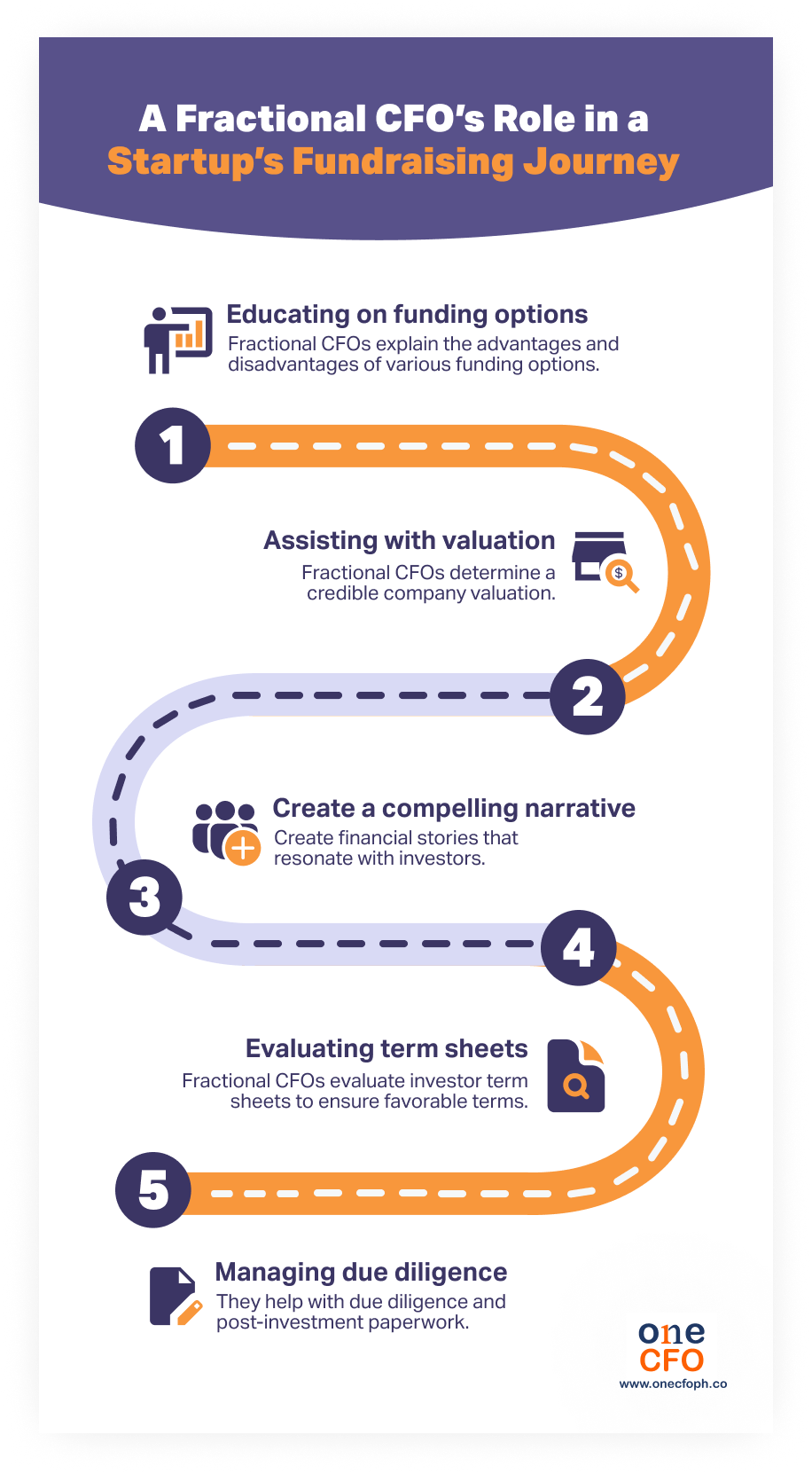
Fractional CFOs help startup founders navigate the complex funding landscape by:
If the company opts for alternative funding sources, such as
loans, fractional CFOs can also
assist by comparing different banks and negotiating loan terms.
Here’s a video on fundraising options for your
startup:
#10 Keeping Your Business Compliant and Up to Date
All businesses must comply with laws and regulations, but keeping up with these changes can
be a burden for decision-makers who are already occupied with growing the business and
running daily operations.
Having a fractional CFO by your side ensures your business remains compliant by tracking
regulation changes and handling compliance requirements, helping you avoid costly penalties
or, worse, business closures.
A fractional CFO ensures your business stays proactive and confident, navigating regulatory changes
smoothly while minimizing risk.
When should you hire a fractional CFO
SMEs and startups should consider hiring a fractional CFO when they need more than
historical reports. They should engage a fractional CFO when they need help interpreting
their numbers and using them to make smarter, forward-looking decisions.
As finances become more complex, managing cash flow, preparing for funding, and planning
next steps can quickly become overwhelming. Handling everything internally adds pressure,
while hiring a permanent CFO at this stage is often costly and unnecessary.
A fractional CFO offers a practical alternative—providing experienced financial guidance
when it’s needed, without the commitment of a full-time role.
With partners like OneCFO, businesses receive financial support tailored to their size and
budget, helping them move forward with greater clarity and confidence.
OneCFO works with SMEs and startups to turn financial data into practical guidance that
supports day-to-day and long-term decisions. Rather than focusing solely on reports, the
team helps business owners understand what the numbers mean, where to focus, and how to
approach financial management more strategically.
This includes improving cash flow visibility, setting up financial processes that scale with
the business, and providing clear input on budgeting, pricing, and tax planning.
When funding or expansion is part of the conversation, OneCFO also helps businesses assess
options and prepare their numbers—always with context and clarity.
All of this support is delivered through a fractional model, giving businesses access to
experienced financial leadership without the cost or commitment of a permanent CFO role.
Learn more at onecfoph.co or email us at [email protected].
Read our disclaimer here.
About OneCFO
Based in the Philippines, OneCFO provides tech-enabled fractional CFO, bookkeeping, tax management, and payroll
support to startups, scaleups, and small- to mid-sized businesses across Southeast Asia.
We help companies manage cash flow, fundraising, and financial strategy. With our fractional CFO expertise,
business owners and finance teams gain clarity in finance and the confidence to grow.